
How Inspections Work Across a Property Portfolio
Portfolio inspections work when one master template carries the items every building shares, local variations are added per site rather than as a separate checklist, the asset register is owned by one team, and contractors complete their inspections inside your system so the evidence lands with you rather than in an inbox. The duty follows whoever has management or control of the asset, which in facilities management is usually you.
 Mitchell BourneManaging Director
 - Published
- Updated
- 7 min read
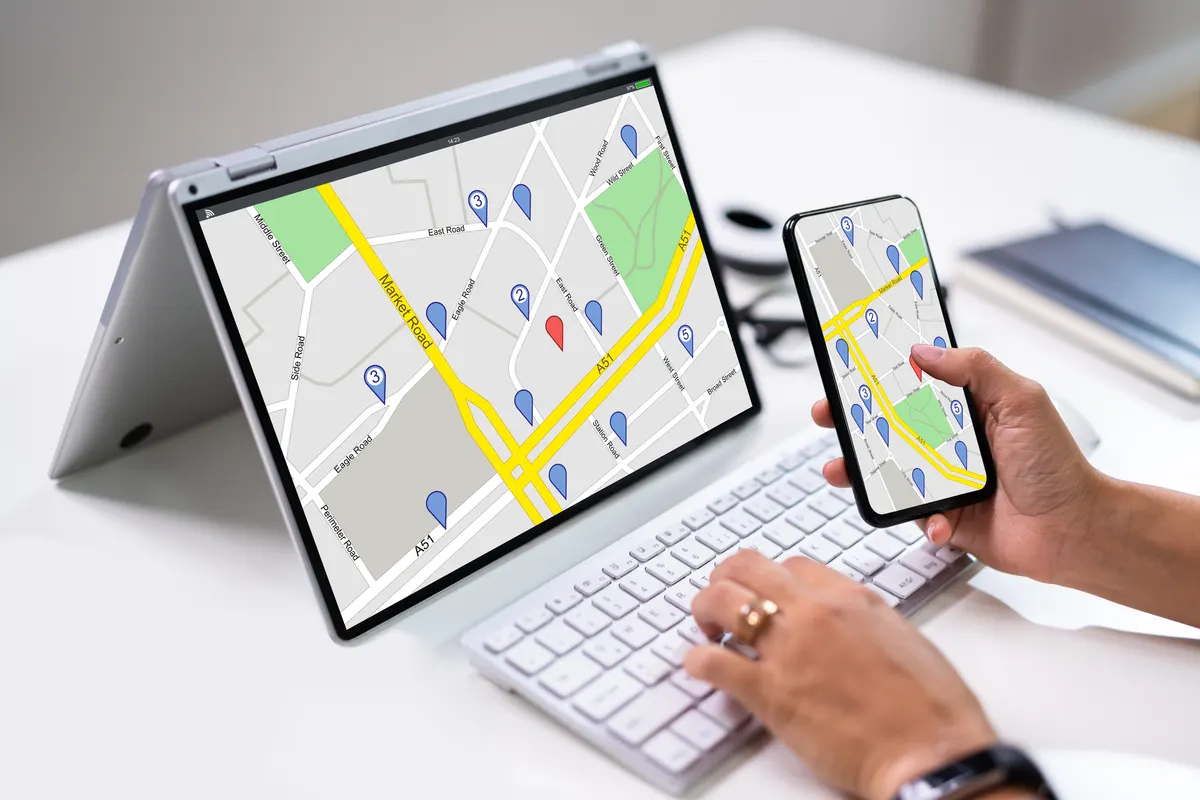
Running inspections on one building is a supervision problem. Running them on fifty is a data problem wearing a supervision costume, and it changes what good looks like. On one site you can walk the floor and know. On fifty you are relying entirely on what comes back, which means the design of what comes back is the job.
Most of the property and facilities teams I talk to are not short of inspections. They are short of comparable inspections. Forty-eight sites doing a competent job on forty-eight slightly different checklists produce a filing cabinet, not a portfolio view.
This post is about the portfolio. What the app on the phone has to do is How to Choose a Site Inspection App, and if your portfolio includes a fleet, the daily pre-start is a different record with its own law behind it, covered in What a Digital Vehicle Inspection Has to Record.
One Checklist, Fifty Buildings, and the Local Variations.
Start with what every building shares. Egress and exit signage, fire equipment servicing, electrical test tags, roof anchor points, lifts, plant rooms, external lighting, water systems. That list is your master template and it should be identical everywhere, because identical is what makes the results comparable.
Then handle the variations honestly, because they are real. A basement car park has a sump and a car stacker. A heritage building has different access. A site in the tropics has a cyclone season and a different roof inspection. A tenancy fit-out adds equipment nobody in your team specified. The wrong answer is a separate checklist per site; you lose the trend the moment you do that. The workable answer is one core template plus a small number of site-specific additions.
ComplyFlow handles that split with the project field on the template: leave it blank and the template is available across every site, or name a site and it is restricted to that one.3 Build the core once, load the items from a CSV of categories, questions, and instructions, and add the local items on top of it rather than beside it.3
The instruction on each item does more work in a portfolio than anywhere else, because the people answering it have never met each other. “Check the roof anchors” produces fifty different standards of check. “Confirm each anchor point carries a current tag dated within 12 months and record the tag date” produces one.
Who Holds the Asset Register.
This is the question that decides whether any of the rest works, and in most portfolios nobody has answered it out loud.
The register decides which inspections exist at all. An asset that is not on the register is not on a schedule, is never overdue, and is never inspected, which is the quietest failure in facilities management. Safe Work Australia’s plant code of practice says you should keep an up-to-date register of the items of plant requiring regular inspection and maintenance, holding the allocated responsibilities for the people dealing with inspections, the standards the plant should be inspected against, the frequency of inspections, the critical safety instructions to follow during one, and the variations from normal operation and trends that may be occurring.2
Read that list again with fifty buildings in mind. It is not a spreadsheet of serial numbers. It is the schedule, the standard, and the trend, all attached to the asset. Whoever owns it needs the authority to refuse an addition that arrives without a category or a location, because a register that anyone may add to and nobody prunes stops being a control within a year.
There is a legal edge on handover. For plant that must be registered, regulation 237 requires the person with management or control to keep the record of all tests, inspections, maintenance, commissioning, decommissioning, dismantling and alterations for as long as the plant is used or until they relinquish control, to keep it available for inspection under the Act, and to make it available to whoever they hand control to.1 When a building changes managing agents, that clause is the reason the handover pack should come out of the system rather than out of somebody’s drive.
Tying the inspection to the asset rather than to the site is what makes this practical. Put a QR code on the machine, and the scan finds the plant item, shows its details, and opens the template configured against it.5 The technician does not have to know which of your fifty sites they are standing on. The code does. That is the plant and equipment half of a portfolio system, and it is usually worth more than the dashboard.
Contractor Inspections, and the Evidence You Are Left Holding.
Most portfolio inspections are not done by your staff. They are done by the lift company, the fire contractor, the electrical test-and-tag crew, the roof anchor specialist. Which is correct: those checks need a competent person, and that competence is exactly what you are buying.
What that arrangement does not do is move the duty. The model WHS Regulations put the plant obligations on the person with management or control of the plant at a workplace, and a contract does not change who that is.1 The code of practice makes the same point about accountability, which should be clearly allocated so that procedures are followed and maintained.9 In practice, the facilities manager holds control of the asset and holds the exposure, whoever holds the spanner.
So the question is not whether contractors inspect. It is what you are left holding afterwards. A PDF emailed to one person’s inbox is not evidence you can produce in a portfolio review, and it certainly is not data you can trend.
The fix is to have the contractor complete your inspection inside your system, on your template. In ComplyFlow a template can be made available to contractors, and the inspection list can then be filtered to show only the inspections available to them, so you can see what came back and what did not.36 Their findings become your actions, with owners and due dates, in the same list as everything else. That is also the moment to check who completed it, because an inspection signed by a name you cannot tie to a current ticket is a gap you will find later.
Rolling Up Without Losing the Site.
The failure mode of every portfolio dashboard is the same: it shows totals, and totals hide exactly what you needed to see. A portfolio at 94% completion is a comfortable number that says nothing about the two buildings carrying all of the missing 6%.
Build the roll-up on exceptions, and make sure every number on it is clickable back to the item. That means being able to filter the whole inspection record by site, by template, by program, by status, by the person who conducted it, and by date completed,6 and to go a level deeper again to every individual checklist item filtered by site, by category, by person responsible, by pass or fail, and by due date, then export it.7 One report, three clicks, from portfolio to the photograph of the failed anchor point.
Scheduling deserves the same treatment. A recurring inspection can be assigned across all sites to a category of staff rather than to named individuals, so a site changing supervisor does not silently drop off the schedule.4 That is a portfolio-scale version of the point made in How to Build an Inspection Schedule That Holds, and it matters more here because nobody is walking the floor to notice.
Three Reports a Portfolio Owner Should Have.
Safe Work Australia’s 2017 report on measuring and reporting gives the two numbers that work at portfolio scale. For a maintenance schedule the lead indicator is the percentage of major equipment assets covered by the schedule, and the lag is the percentage of assets with planned maintenance overdue.8 Coverage and overdue. Add one more of your own, and you have a monthly pack worth reading.
- Coverage. Assets and sites on the schedule as a share of the asset register, and the list of what is missing. This is the report nobody runs and the one that finds the next incident.
- Overdue. Inspections and actions past their date, by site, with an owner beside each. Not a percentage, a list of names.
- Repeat findings. The same checklist item failing more than once on the same asset, or across one contractor’s work. This is the report that tells you the control is not working, which is precisely when the Regulations require you to review and revise it.1
Send the third one to whoever holds the maintenance contracts. It changes those conversations completely, because it replaces an opinion about a contractor with the same item failing four times in six months.
Compare Three Checklists Against the Master Template.
Export your asset register and your inspection schedule side by side and find the rows that appear in one and not the other. Then take your three busiest buildings and compare their checklists line by line; wherever the wording differs, the master template is the version that wins.
Neither of those takes a project. Both of them tell you what your portfolio reporting is currently worth, which is usually less than the effort going into it. For the facilities manager, a portfolio system earns its place on one test: can you name the building with the most repeat findings this quarter without asking anyone. If you want to see that report run against your own sites, book a demo and bring your register.
Sources
- Model Work Health and Safety Regulations
- Managing the risks of plant in the workplace: Code of Practice
- Adding Inspection Templates
- Scheduled Inspections
- Scanning a QR Code to Start a Plant Inspection
- View Inspections
- Inspection Checklist Items Menu
- Measuring and reporting on work health and safety
- How to manage work health and safety risks: Code of Practice
Written by
Mitchell BourneManaging Director, ComplyFlow
Mitch has run ComplyFlow since 2009 and has spent that time inside the contractor, site, and safety problems of Australian operators. He writes about where compliance actually fails, and what the people responsible for it can do about it.
Writes about: Contractor compliance, WHS duty and proof, Running a compliance program
Questions
Questions People Ask About This.
How do you run the same inspection across fifty sites without losing local detail?
Build one master template with the items every building shares, then handle the variations as extra items or site-specific templates rather than as fifty separate checklists. In ComplyFlow, leaving the project field blank makes a template available across all sites, while selecting a site limits it to that one, so the common core and the local additions can sit side by side and still report together.
Who is responsible when a contractor does the inspection?
You still are, for your part. Under the model WHS Regulations the plant duties sit with the person with management or control of the plant at the workplace, and engaging a specialist does not move that. What the contractor's inspection gives you is evidence that the check was done by a competent person, and the point of having them complete it in your system is that the evidence lands with you rather than in an email.
What should a property portfolio dashboard show?
Exceptions, not totals. Which sites have inspections overdue, which assets have failed the same item more than once, and which actions are past their due date and who owns them. A dashboard that shows 94% completion tells you nothing about the 6%, and the 6% is the job.
Who should own the asset register in a facilities team?
One team, named, with the authority to refuse an addition that is missing a category or a location. The register decides which inspections exist at all, so a register that anyone can add to and nobody prunes will quietly leave assets off the schedule, and an asset that is not on the schedule is never overdue and never inspected.
Do inspections need to be handed over when a building changes managers?
For plant that must be registered, yes. Regulation 237 of the model WHS Regulations requires the person with management or control to keep the record of tests, inspections, maintenance, commissioning, decommissioning, dismantling and alterations, and to make that record available to whoever they relinquish control to. In practice, build the handover pack from the system rather than from a shared drive.



See it against your own contractors, sites, and rules.
Book a 30-minute demo. We will show ComplyFlow working with your kind of sites, your kind of contractors, and your requirements. No slides, no hard sell.
- ISO 27001
- Hosted on AWS
- Microsoft & Okta SSO
- API & MCP
- Data in Australia
Compliance you can prove, instantly.